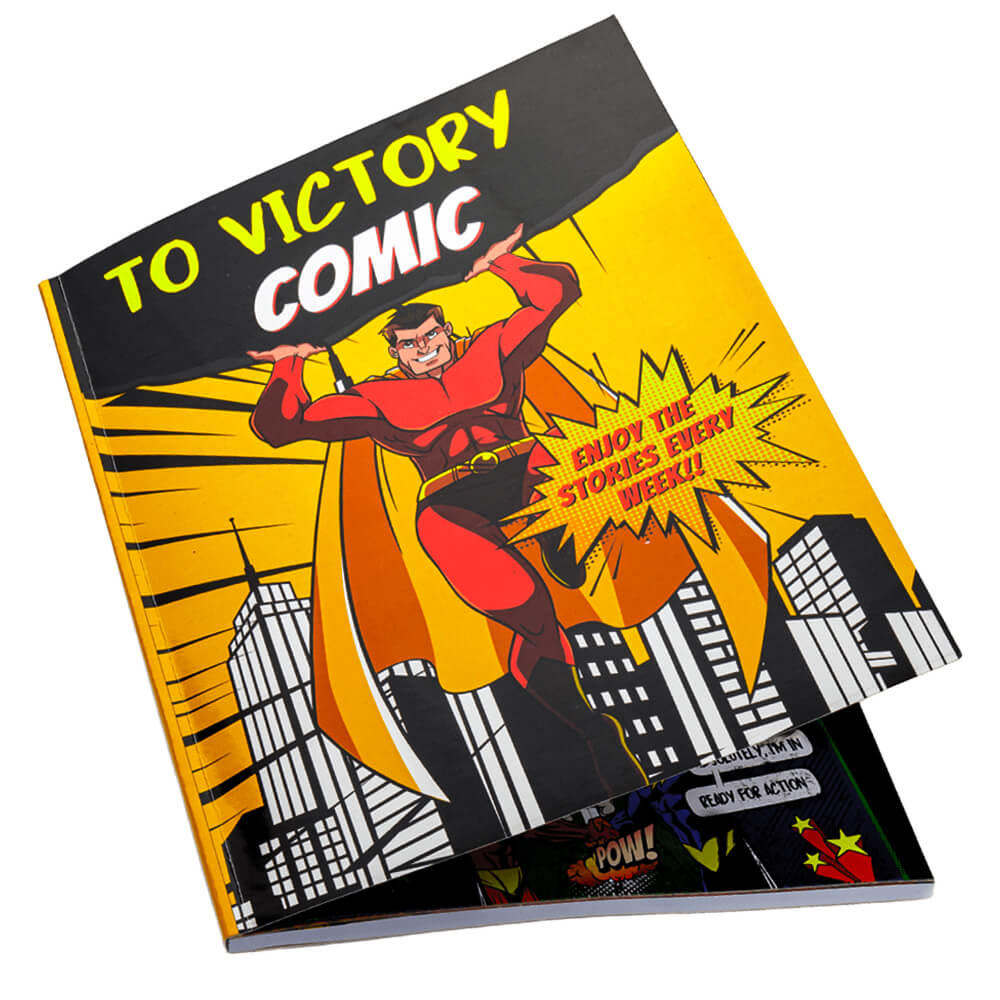
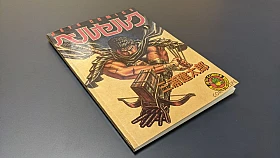
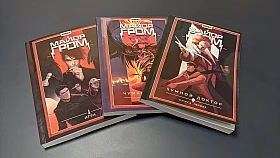
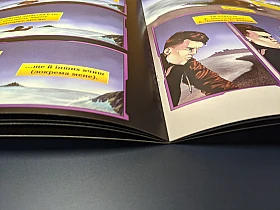
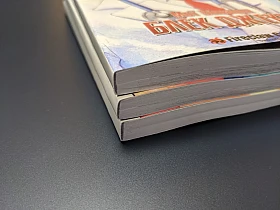
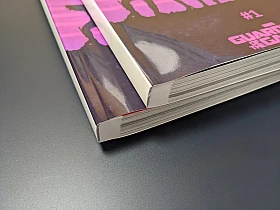
How to create a comic book and prepare your own layout for submission to the printer are important questions, so please take note of the basic pre-printing requirements. They will help you avoid technical revisions and speed up the printing process.
- General Requirements
To ensure your comics are printed with high quality and accurate color and detail reproduction, we recommend adhering to the following requirements:
- File format — PDF, by pages (not spreads).
- All pages must be compiled into a single file in the correct sequence.
- The cover must be submitted as a separate file (PDF / PNG / JPG).
- Image resolution — 300 dpi for clear graphics and illustrations.
- It is recommended to convert fonts to curves or embed them.
- The number of pages must be even, and for stapling — a multiple of 4.
Compliance with these requirements ensures high-quality comic book printing with sharp images and rich colors. - Formats and Sizes
- A5 and A4 formats are most commonly chosen for ease of use; B5 is less common.
- It is also possible to produce comics in custom sizes within standard format limits, depending on the author’s style and concept. - Recommended margins
- Inner margin at the spine: 15–20 mm.
- Outer margins: 10–15 mm.
- Bleed: 3–5 mm.
- Safe zone: at least 8–10 mm.
These margins help maintain the integrity of the layout and ensure the comic looks neat after printing. - Technical specifications for print layouts
- Color mode: CMYK.
- Resolution: 300 dpi.
- File format: Print-ready PDF.
- The layout must be free of crop marks, comments, watermarks, and unnecessary elements.
- All pages must be submitted in a single file, paginated and in the correct sequence.
- It is recommended to convert fonts to curves or embed them in the file.
- Key elements should be placed within the safe zone.
These settings ensure high-quality comic book printing with crisp lines and rich colors. - Cover
- Soft covers are most commonly used for comics, combined with perfect binding. This is a practical option for serial publications and mass printing, offering convenience and affordability.
- Choose between softcover or hardcover; your choice allows you to adapt the comic for both commercial printing and individual projects. - Lamination
Lamination is used to protect comic book covers from wear and tear and physical damage:
- Gloss lamination — enhances color vibrancy, making the cover more vivid and visually striking.
- Matte lamination — creates a subtle look, reduces glare, and adds a premium effect.
Lamination also increases the publication’s durability and protects it from scratches and moisture. - Important details regarding production parameters
- All images and text blocks should be placed with the bleed area in mind so that important elements do not fall within the trim or binding area.
- A 3–5 mm bleed must be included to ensure pages are formed correctly without white margins.
- Technical printing and cutting tolerances of 1–2 mm are possible, so avoid placing important content too close to the edges.
- Small text in speech bubbles must be clearly legible after printing—avoid fonts that are too thin or small.
- For multi-page comics, it is important to maintain the correct page order in the file.
Following these guidelines ensures a neat appearance and a high-quality reading experience for the comic after printing. - Additional Services
- Proofreading and preparing the layout for printing.
- Separating the layout from spreads into individual pages.
- Assistance with page layout and final design.
- Selecting the optimal format and adapting it for printing.
These services help you avoid errors in the layout and ensure a high-quality final comic book.


 Back
Back